Modern medicine is changing fast with digital innovation. Doctors in India are now using advanced tech to make quicker and more precise health decisions.
This change is thanks to Artificial Intelligence. It can quickly process complex data. These tools help doctors spot patterns that might be missed by humans
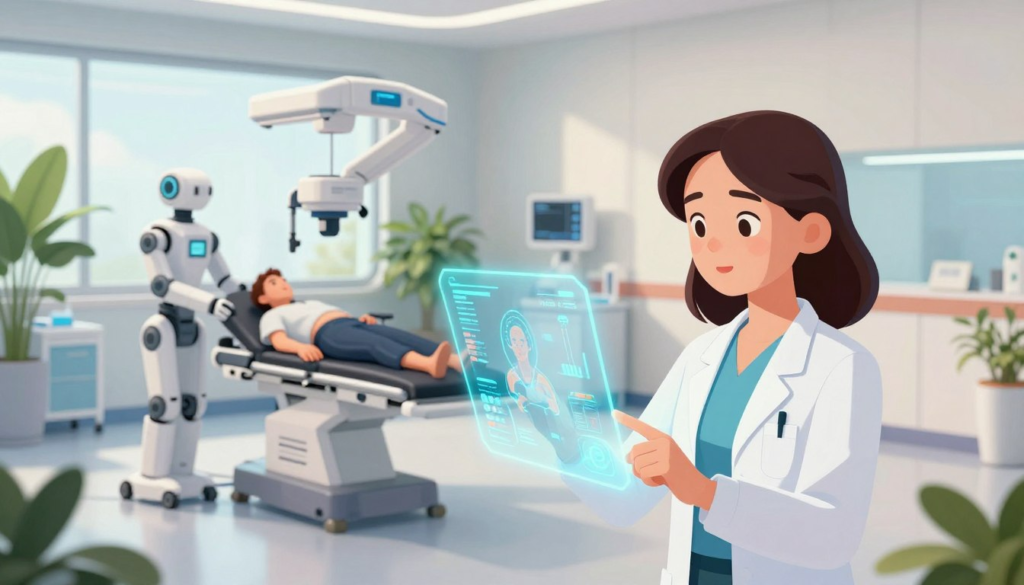
Agentic AI is also making a big impact in hospitals. It can handle complex tasks, making sure your treatment is both tailored and efficient.
You’re seeing a new era where tech helps keep you safe. This digital shift is not just about machines. It’s about saving lives with smarter, more responsive care.
Key Takeaways
- Modern medical technology is significantly improving patient outcomes across India.
- Digital tools help clinicians make faster and more accurate diagnostic decisions.
- Advanced systems identify health patterns that are often invisible to the human eye.
- New technology streamlines complex hospital workflows to enhance your treatment experience.
- The integration of these systems ensures that your healthcare journey is more personalized.
The Evolution of Modern Medicine in India
Remember when medical records were in dusty paper files? That time is almost gone. Medicine in India has changed a lot in recent years. This change is not just about making things easier; it’s about saving lives by giving doctors better access to information.
From Traditional Diagnostics to Digital Transformation
Before, your medical history was spread out in different clinics. This made it hard for doctors to understand your health fully. Now, healthcare technology is bringing all your records together. Platforms like the Ayushman Bharat Digital Mission are making it easier for hospitals to share information.
This change means doctors can diagnose faster and treat you better. By moving to digital records, clinics are avoiding mistakes that come with paper charts. Now, your important health info is always ready when you need it.
How Your Health Data is Shaping the Future
Your health data is key to a better medical system. When you share your data, you help doctors and researchers find new ways to care for people. This is what digital health India is all about: using your info to make smarter choices.
As healthcare technology gets better, your data becomes even more powerful. You’re not just a patient; you’re part of a connected system. Knowing this helps you see how your local clinics are getting better and more reliable all the time.
Understanding Artificial Intelligence & Agentic AI
Knowing how your diagnosis is made can boost your confidence. As technology advances in Indian hospitals, it’s key to understand these systems. Artificial Intelligence & Agentic AI are real tools aimed at bettering your health care.
Defining Intelligent Systems in Clinical Settings
In today’s hospitals, intelligent systems are your doctor’s reliable partner. They offer clinical decision support by quickly analyzing medical data. It’s like having a second pair of eyes that never gets tired.
Your doctor can spot patterns in your symptoms thanks to these systems. They suggest treatments based on solid evidence. This mix of human insight and machine accuracy is the heart of modern medicine.
The Shift from Passive Algorithms to Agentic AI
Old software and new tools differ a lot. Passive algorithms just show data without acting. But Artificial Intelligence & Agentic AI can take the lead in helping your care.
An agentic system does more than show info; it suggests treatments or alerts staff to urgent changes. This proactive approach means quicker action when time is critical. With advanced clinical decision support, doctors can focus on you while the tech handles the complex stuff.
Early Disease Detection and Predictive Analytics
Imagine knowing about a health issue before you even feel a single symptom. This is now a reality thanks to digital health tools in India. By focusing on proactive wellness, you can take control of your future health with more confidence.
Advanced technology lets doctors monitor your health in new ways. This change means you get care when it’s most needed, not when it’s too late.
Identifying Risks Before Symptoms Appear
Predictive analytics are at the core of this change. These systems look at your health history to find early signs of problems. They check your blood pressure, glucose levels, and sleep patterns for risks.
This early warning system is incredibly valuable for your long-term health. Spotting a risk early lets you make changes or get advice before it’s serious. It flips the medical model, focusing on prevention over treatment.
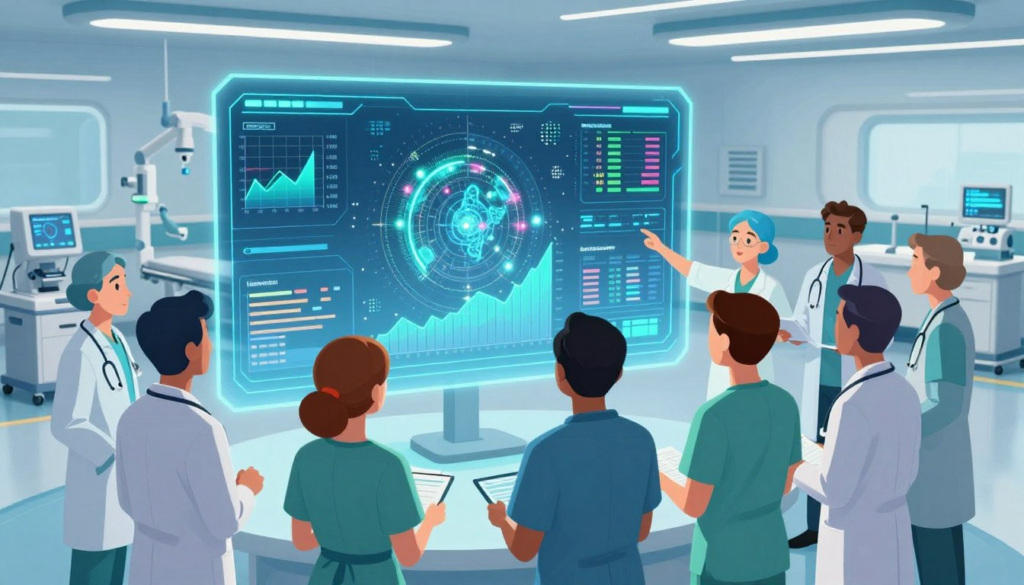
Leveraging Machine Learning for Chronic Condition Management
Managing long-term health issues like diabetes or heart disease needs constant care. Machine learning models are great at this. They learn from your health data and offer personalized advice.
These smart systems give you tailored recommendations that fit your body’s needs. This dynamic approach means your treatment plan grows with you. It helps you live well while managing complex diseases.
Transforming Medical Imaging and Radiology
Your next X-ray or MRI scan could be analyzed by a digital assistant. The rise of medical imaging AI is changing how doctors read complex images. These systems act as a second pair of eyes, making sure your results are accurate
you
Enhancing Accuracy in X-rays and MRI Scans
Radiologists often struggle to spot small, hidden abnormalities in scans. Medical imaging AI is great at finding these issues. It helps doctors feel more confident in their diagnoses.
These algorithms quickly process scan images. They highlight important areas, helping doctors make quicker, better decisions. This is crucial for catching conditions like tumors or fractures early.
Reducing Radiologist Burnout with Automated Triage
Busy hospitals can exhaust medical staff with too many scans. Automated systems sort results by urgency. This means urgent cases get seen right away.
Medical imaging AI lets radiologists focus on tough cases, not just sorting. This improves care quality and supports staff well-being. Here’s how AI changes the game compared to old methods.
| Feature | Traditional Radiology | AI-Assisted Radiology |
|---|---|---|
| Scan Analysis | Manual interpretation | Automated pattern detection |
| Workflow Speed | Standard queueing | Prioritized triage |
| Error Rate | Higher risk of fatigue | Reduced human error |
| Result Delivery | Delayed | Near real-time |
Personalized Treatment Plans Tailored to You
Imagine a world where your medical treatment is as unique as your DNA. Doctors now use advanced tech to create care paths that match your biological needs. This shift to personalized medicine means you get the right care at the right time
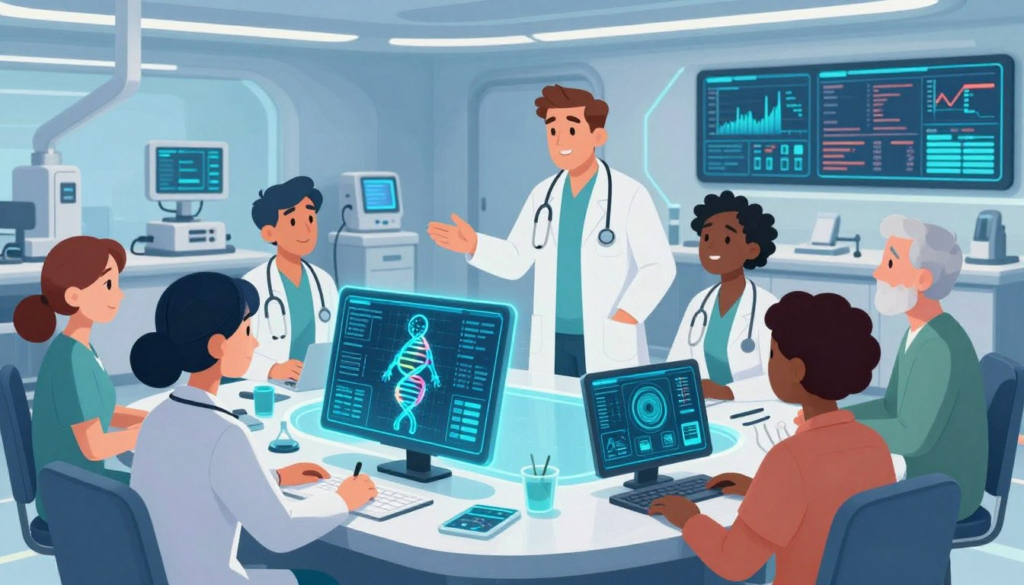
Precision Medicine and Genomic Data Analysis
Your genetic profile is like a blueprint for your health. By analyzing your genomic data, doctors can find the best medications for you. This avoids potential adverse reactions.
Doctors can predict how you’ll react to certain therapies by understanding your genetic predispositions. This is a big change for patient outcomes, especially in complex areas like oncology and cardiology. You benefit from:
- Targeted therapies that focus on the root cause of your condition.
- Reduced risk of side effects from incompatible drugs.
- Faster recovery times due to highly accurate treatment selection.
Adapting Therapies Based on Real-Time Patient Feedback
The journey to recovery doesn’t stop with a prescription. Modern healthcare systems now use real-time feedback loops. This lets your medical team monitor your progress closely.
If your body reacts differently than expected, your treatment plan can be adjusted right away. This ensures you stay on the path to wellness.
“The future of medicine lies in our ability to listen to the patient’s data as much as we listen to the patient themselves, creating a dynamic dialogue between biology and care.”
This continuous monitoring helps healthcare providers refine your care in real-time. They track your symptoms and physiological responses. This allows them to optimize your dosage or switch strategies before a problem escalates.
Ultimately, this proactive approach is designed to improve your overall quality of life. It ensures that your patient outcomes remain the top priority throughout your healing journey.
The Role of AI in Remote Patient Monitoring
Digital health in India is changing. Now, you can get quality care from anywhere. Healthcare providers can watch your health without you going to the clinic. This is a major leap forward in managing health and wellness.
Wearable Technology and Your Daily Health MetricsWearable devices are like personal health assistants. They track your heart rate, blood pressure, and blood sugar levels in real-time. This means your health data is always up to date and secure.
When your health metrics are not in the safe range, your doctor gets a notification right away. This quick action helps prevent small problems from becoming big emergencies. It gives you control over your health.
Bridging the Gap Between Rural India and Urban Specialists
Getting top medical care used to be hard for those in rural areas. But now, remote patient monitoring is changing this. It connects rural patients with urban specialists, ensuring you get expert medical attention no matter where you are.
This technology is making healthcare more fair for everyone. You can get top-notch medical insights and care plans from home. It’s transforming lives by making healthcare more accessible across India.
Streamlining Hospital Operations and Patient Care
Modern healthcare technology is changing how hospitals work. You might not see it, but digital tools are always working to make your visit smooth. These systems aim to make hospitals more efficient, cutting down wait times and improving care quality.
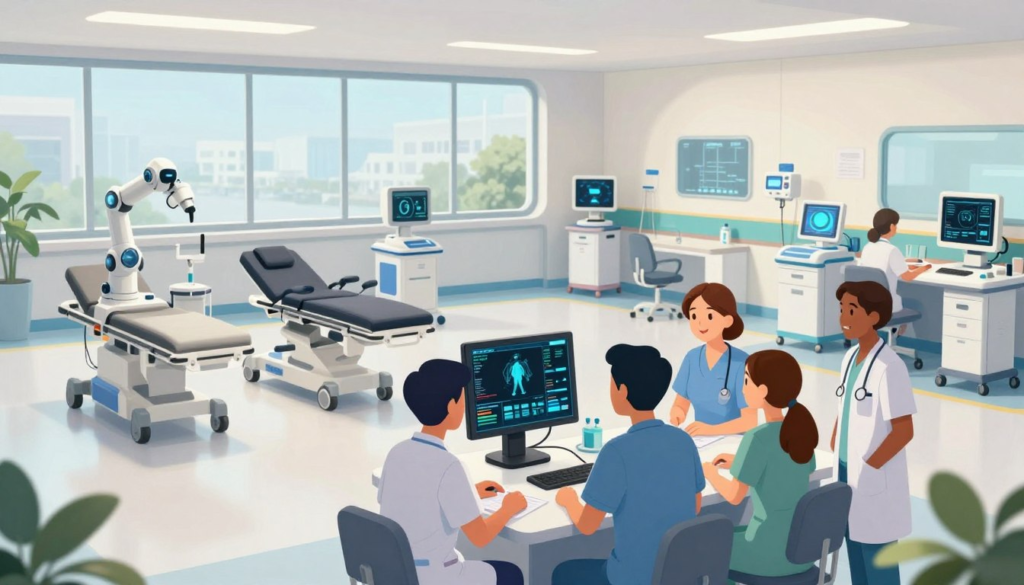
Optimizing Bed Management and Staff Scheduling
Smart systems now predict when patients will arrive. This lets hospitals manage beds in real-time, so a room is ready when you need it. No more waiting in hallways for a bed during emergencies.
These platforms also schedule staff better, matching specialists with the right patients. This ensures your medical team is always ready and not overwhelmed. It’s a key part of modern hospital efficiency.
Reducing Administrative Burdens for Healthcare Providers
Doctors and nurses often spend hours on paperwork, taking them away from you. New healthcare technology automates tasks like data entry and billing. This lets your care team focus on your health and recovery.
“The true value of digital transformation in medicine is not just in the machines, but in the time it gives back to the human connection between patient and provider.”
With smart algorithms handling admin tasks, hospitals become more responsive. You get faster service, clearer communication, and a more organized experience from start to finish.
| Feature | Traditional System | AI-Driven System |
|---|---|---|
| Bed Allocation | Manual/Paper-based | Real-time Automated |
| Staff Scheduling | Static Rosters | Dynamic Load Balancing |
| Administrative Tasks | High Manual Effort | Automated Workflows |
| Patient Wait Times | Often Unpredictable | Optimized and Reduced |
Ethical Considerations and Data Privacy
Your trust is key in digital health. Keeping your medical history safe is a top priority for providers. As tech becomes more part of your care, keeping your data private is crucial.
Protecting Your Sensitive Medical Information
Today’s medical systems use strong encryption to protect your records. In India, new digital health plans are coming to let you control who sees your health info.
These steps keep your healthcare data privacy safe, even when sharing with specialists. You can know how your data is stored and used. This lets you make smart choices about your digital health.
Ensuring Transparency and Fairness in AI Decision-Making
How algorithms handle your health data must be clear and fair. AI ethics are key to avoid unfair treatment. This ensures everyone gets the same care, no matter their background.
Now, developers are making systems that explain their decisions. This human-in-the-loop method lets doctors check AI suggestions before they affect your care.
By focusing on AI ethics, healthcare becomes more respectful and efficient. Being open about these processes makes you trust that tech is working for you.
Overcoming Challenges for Widespread Adoption
Ever wondered how to bring high-tech medical care to every corner of India? The journey to widespread adoption is filled with big challenges. First, we need to improve our health infrastructure to make sure these new technologies reach all patients.
Infrastructure Requirements in the Indian Healthcare Ecosystem
We must close the gap between city hospitals and rural clinics. Reliable internet and stable power are key for modern health infrastructure. Without them, even the latest diagnostic tools can’t work in remote areas.
Investing in cloud storage and secure data centers is also crucial. These systems help hospitals share information safely. By building a robust digital foundation, we can make life-saving tech available to everyone, not just city folks.
Training Medical Professionals to Work Alongside AI
Technology works best when used by skilled people. Medical training is key to making doctors comfortable with new digital tools. These systems are meant to assist, not replace, human expertise.